Strong by Summer: An Energy Plan, Not a Swimsuit Plan
Every spring, the same message shows up: a body you're supposed to want by a certain date. This is a different plan — eight to ten weeks built around the energy and capability you actually want this summer: walking the beach, keeping up on the hike, carrying the cooler, saying yes to the trip. Not one part of it is about how you'll look.
By Diane Marsh··10 min read
Claims on this page are checked against the CDC's physical activity guidelines, Harvard Health, The Menopause Society and Cleveland Clinic — all four sources are linked below.
General education, not medical advice. Talk to your doctor before starting something new.
The short version
- This is a plan for more energy and capability by a real date — never a different-looking body by one.
- The real targets: walking the beach without your knees complaining, keeping up on the hike, carrying a cooler, saying yes to the trip.
- The shape is simple and already laid out here: a walk most days, two short strength sessions a week, for eight to ten weeks.
- Hot flashes and summer heat get an honest answer too: moving your walk to the coolest part of the day helps; the walk itself won't stop the hot flashes.
- A missed week from travel or a heat wave doesn't undo the plan. Most weeks, not perfect weeks, is what actually works.
If you've ever stood in a fitting room in May running the math on how many weeks stood between you and a vacation photo, you're not unusual, and you're not vain. Almost every one of us has done that math. I've done that math.
Here's the thing nobody selling you a countdown wants you to notice: the math was always about how you'd look in one photo, on one day. It was never about the actual summer — the hike, the lake, the cousin's backyard barbecue, the flight you almost didn't book because you were tired just thinking about it.
The Industry Wants A Different You By June. I Want A More Capable One.
Every spring, the same ads show up in your feed, and they all say some version of the same thing: a certain number of weeks stand between you and a body you're supposed to want more than the one you have right now. It's swimsuit-countdown season, and it has been since long before either of us had a wrinkle to worry about.
I'm not going to pretend I've never felt that pull, or that you're behind for feeling it. It's a well-built message, aimed at a real, human worry, and it's worked on nearly all of us at some point. This isn't about shaming anyone who's bought a plan, a wrap, or a tea because of it. I'm asking you to consider a different plan instead, that's it.
So here's mine, up front: this is a plan for the summer you actually want to have, not a photo you want to be in. Eight to ten weeks, built around energy and capability, with a real date at the end of it — not a deadline you can fail, just a season this is aimed at.
What You Actually Want This Summer (It's Not A Photo)
Close your eyes for a second and picture an actual good day this summer — not a photo of one, a real one, start to finish. For most of the women I hear from, it looks something like this.
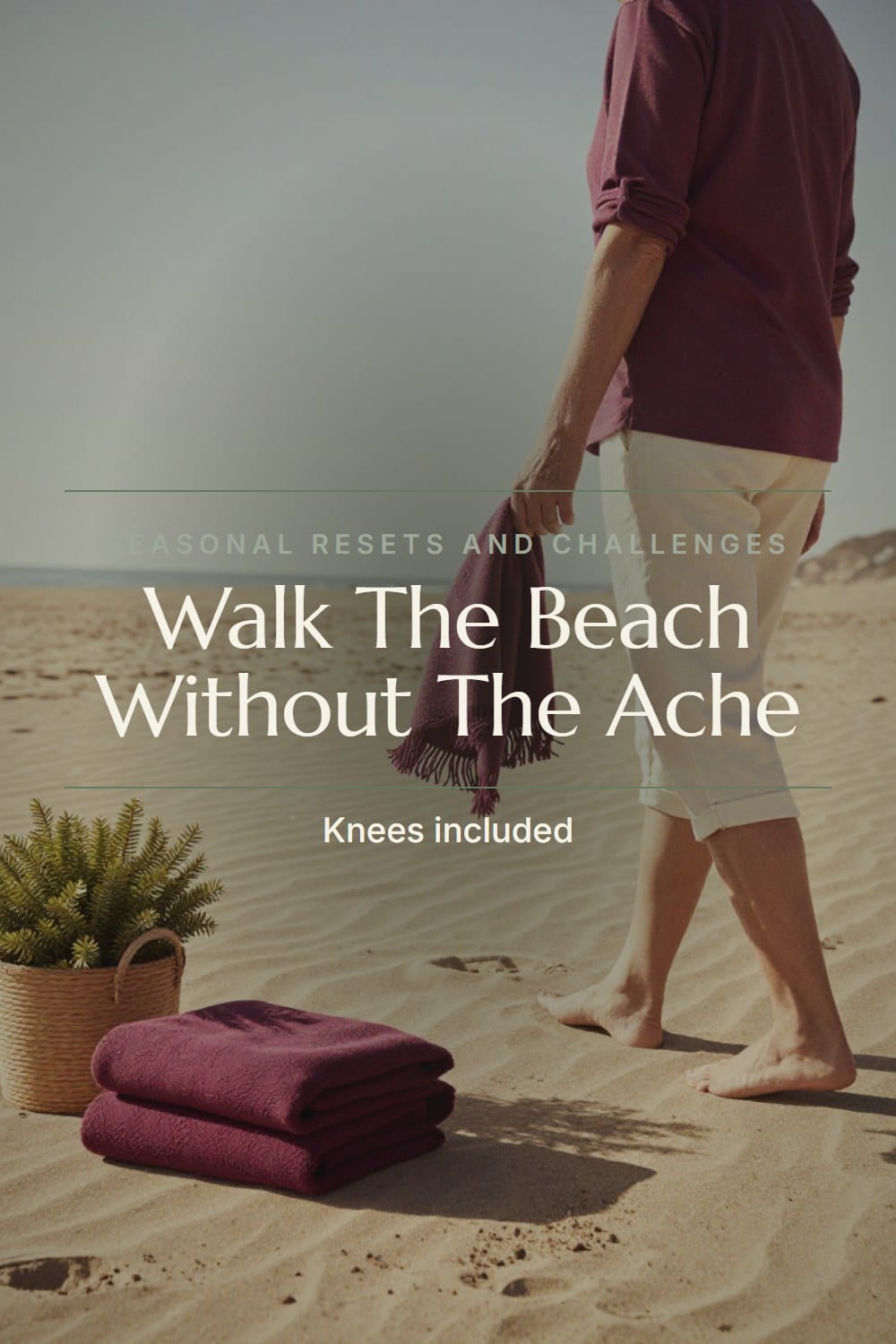
- Walking the beach or the lake path without your knees starting to complain halfway
- Keeping up on the hike, instead of being the one everyone waits for at the bottom
- Getting in and out of a kayak or a low chair without it turning into a whole production
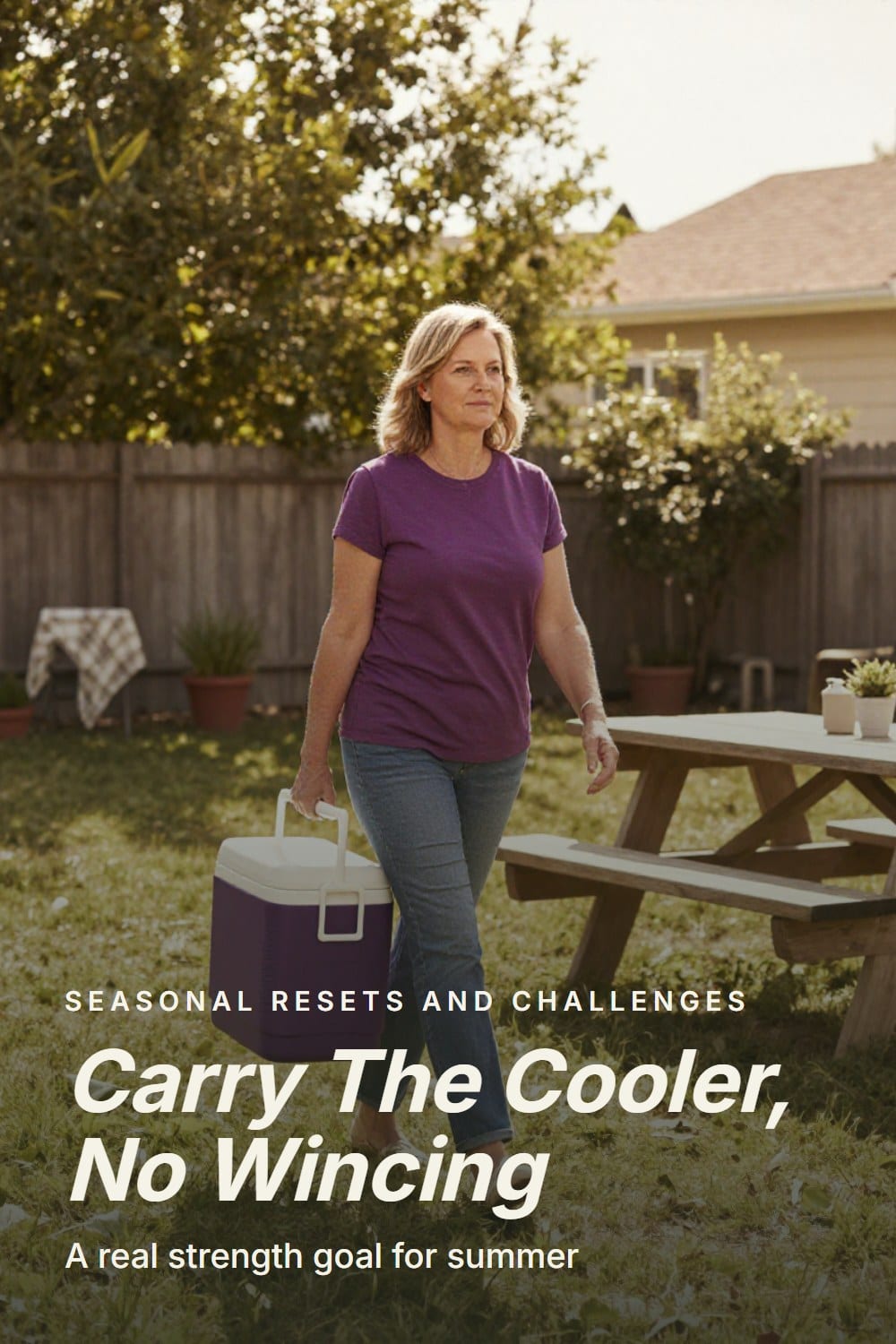
- Carrying a full cooler, a suitcase, or a grandkid up a flight of steps without wincing
- Standing at the barbecue for three hours and still feeling like yourself at the end of it
- Saying yes to the trip, the hike, the invitation — instead of quietly finding a reason not to
Read that list again. Not one line on it is about how you'd look doing any of it. That's the whole point, and it's also the whole plan.
What This Summer Actually Needs From You
Here's the real checklist — what you want to do, what it actually takes, and where to start if you don't already have a plan going.
| What you want to do | What it actually needs | Where to start |
|---|---|---|
| Walk the beach without your knees complainingSand is harder on tired knees than pavement — build the habit on flat ground first. | Steady walking endurance, plus stronger hips and knees | Start with a basic walking habit if you don't have one yet |
| Keep up on the hike | Aerobic endurance you build gradually, not all at once | A regular walk most days, with a little more distance most weeks |
| Get in and out of a kayak (or a low chair) with ease | Hip and leg strength, plus balance | Two short strength sessions a week |
| Carry a cooler, a suitcase or a grandkid | Grip, shoulder and back strength | Two short strength sessions a week |
| Stand at the barbecue for three hours | General stamina from consistent movement, not any single workout | The walking habit and the strength sessions, together, over weeks |
| Say yes to the trip | A little bit of everything above, plus real sleep | All of it, most weeks, for eight to ten weeks |
The Shape Of It: Walk, Lift Twice, Eat Enough Protein, Actually Sleep
I'm not going to rebuild the whole plan here, because it already exists: the two-part week — a walk most days, two short strength sessions worked in around it. That's the backbone of these eight to ten weeks, not a separate summer program.
If you don't have a walking habit going yet, start there before anything else. Our free four-week walking plan needs no equipment and no gym — fifteen minutes to start, building from there. Everything on the capability list above assumes a walk is already part of your week.
Once walking is a normal part of your days, two short strength sessions a week — a kitchen chair, a couple of resistance bands, six moves — is what turns a walking habit into the ability to carry a cooler, climb out of a kayak, and stand through three hours on your feet without your legs filing a complaint.
Protein and sleep are the quieter half of it, and neither one needs to be complicated. Eating enough protein through the day is what lets that strength work actually build something instead of just leaving you sore, and real sleep is a big part of how you feel from one day to the next. Neither one is a summer-specific trick — they're just part of the same plan, every week of it.
The Summer-Specific Stuff Nobody Tells You
A few things about this particular season that are worth saying honestly, instead of glossing over.
If hot flashes are part of your life right now, summer heat can make things feel harder, and I'm not going to pretend a walk fixes that. The honest research on exercise and hot flashes is genuinely mixed — nothing reliably shown to cut how often they happen. What is well established is that overheating, including from a hard workout in direct sun, is a common trigger. So this time of year, the walk moves to the coolest part of the day, not the other way around.
A full water bottle matters more in July than it does in January — carry one, especially on the days you're out longer than usual or flying somewhere with a dry cabin and a rental car with no shade. And travel weeks are going to happen: a few days where the plan is a walk around a hotel parking lot or nothing at all. That's not a setback. That's just a travel week.
What I Learned The Summer I Sat One Out
That's the entire pitch, really. Not a different body by a date on the calendar. The ability to walk down to the water and back without it costing you the whole rest of the day.
If You're Starting Late, Or Not Sure You Have Eight Weeks
Maybe you're reading this in July with a trip in three weeks, not nine. Three weeks of a real walking habit and one or two strength sessions a week will still leave you more capable than zero weeks of it — it just won't be the whole eight-to-ten-week difference. Start today's version of it anyway. There's always another season after this one, and the same plan works for it too.
This is one of a few seasonal on-ramps we cover here — if the version of this that actually calls to you is a January start instead of a June one, we cover that season too. Same honest approach, different month.
Where this comes from
Every claim above traces to one of these four.
- 1Adult Activity: An Overview
CDC
Supports: That the CDC recommends adults get roughly 150 minutes of moderate-intensity aerobic activity a week, plus muscle-strengthening activity on 2 or more days that works all the major muscle groups — the same walk-most-days-plus-twice-a-week-strength shape this plan is built on.
- 2Functional Fitness
Harvard Health · 2024
Supports: That functional fitness training — built around real movement patterns like lifting, carrying and climbing stairs — is specifically aimed at making everyday activities feel easier and less tiring, describing its goal as strength, flexibility and resilience for daily life rather than a change in appearance.
- 3Hot Flashes
The Menopause Society
Supports: That The Menopause Society groups exercise among approaches that have limited solid data on effectiveness or have failed to show significant benefit specifically for hot flashes, and names cooling techniques and avoiding known triggers as its lifestyle recommendations instead.
- 4Hot Flashes
Cleveland Clinic · 2024
Supports: That common hot flash triggers include hot weather, warm rooms and being overheated — including during exercise — and that exercising in a cool environment is among its recommended self-care steps.
Free, and printable
The Free 4-Week Indoor Walking Plan
The plan sign-up is not live yet — the mailing list is still being set up. In the meantime, email hello@strongandrooted.com and Diane will send it to you herself.
One email when there is something worth sending. Unsubscribe whenever you like.
Frequently asked questions
Can I actually get in shape in eight weeks?
What if my trip is in three weeks, not eight or ten?
Do I need to change how I eat to have more energy?
Will this help with hot flashes if it's already hot out?
The summer worth having isn't the one you'd pose for. It's the one where you walk down to the water and back without your knees complaining, keep up on the hike instead of waiting at the bottom, and still have energy left when everyone else is heading home. Start with the free walking plan if you don't have a habit going yet, add two short strength sessions once you do, and if you want the fuller picture of how all of this fits into an actual week, the complete guide to midlife wellness routines is where the rest of it lives. However you get there, the goal was always what you could do, not what the camera caught.
Free, and printable
The 4-Week Indoor Walking Plan
The plan sign-up is not live yet — the mailing list is still being set up. In the meantime, email hello@strongandrooted.com and Diane will send it to you herself.
One email when there is something worth sending. Unsubscribe whenever you like.
Written by
Diane Marsh
At 49 I was tired, achy, sleeping badly, and being told to do more cardio and eat less — which was making all of it worse. I started walking. Fifteen minutes, indoors, in socks. Three years later I am stronger than I was at forty. I write down exactly what I did, cite the research where it exists, and admit where it doesn't.
Diane is not a doctor, a physical therapist, or a dietitian. She is a woman who rebuilt her own strength after perimenopause, reads the research carefully, cites it, and says so when nobody actually knows.
Keep reading
Every October, the internet sells you a countdown to a smaller body by the holidays. Here's a different one: eight to ten weeks to a body that can carry every bag in one trip, breeze through travel, and still have energy at nine at night. Strong, not skinny — that's the whole plan.
A New Year Reset for Women Over 40 (Without the Crash Diet)For thirty Januarys, the deal has been the same: fix yourself, starting now, no exceptions. Here's the honest alternative — keep the fresh start, skip the crash diet, and build something small enough to actually survive a real winter Tuesday. Two anchors, not twelve rules, and the research on why day 21 was never a fair place to judge yourself.
Midlife Wellness Routines: The Complete Guide to Making It StickSeven categories of genuinely good advice, and the plan still doesn't stick? It was never about willpower — it's about the size of what you picked, and the season you picked it in. The honest, fully-sourced reframe on consistency, plus exactly where to go next for wherever you are today.