Do Weighted Vests Really Help Your Bones? An Honest Look for Women Over 40
Every wellness feed says the same thing: strap on a weighted vest and protect your bones after 40. I looked at what the research actually shows — it's not quite that simple, and not quite nothing either. Here's the honest picture, plus how to start one safely if you decide it's worth it.
By Diane Marsh··11 min read
Claims on this page are checked against Cleveland Clinic, a careful 2026 trial published in Frontiers in Aging, a study in the Journals of Gerontology, and NIAMS (NIH) — all five sources are linked below.
This post contains affiliate links. As an Amazon Associate I earn from qualifying purchases — at no extra cost to you.
General education, not medical advice. Talk to your doctor before starting something new.
The short version
- Bone loss after menopause is real and often faster than most women expect — this isn't overblown.
- Walking in a weighted vest, by itself, hasn't been shown to meaningfully improve bone density in controlled research.
- The one study that did find a hip-bone benefit combined a vest with jumping and resistance work, not walking alone.
- What a vest reliably adds is cardiovascular and muscular effort to a walk — a real reason to own one, just not a bone-density reason.
- If you try one, start around 5% of your body weight — comfortable and consistent beats heavy and occasional.
If you've spent any time on Pinterest or TikTok lately, you've probably seen it: a woman about your age strapping on a weighted vest before her morning walk, captioned like it's the missing piece for your bones after 40.
I want to give you the honest version of that claim, not the exciting one. Here it is, up front: bone loss after menopause is real, and it's worth taking seriously. Walking in a weighted vest, by itself, has not been shown to meaningfully improve bone density in the research we actually have. Both of those things are true at the same time, and neither one is the whole story — so let's walk through all of it, in order.
Bone loss after 40 is real — this part isn't hype
Let's start with what's genuinely true, because it's easy to lose this part in the noise around it. Bone density naturally declines with age, and for most women that decline speeds up substantially around menopause, as estrogen — which helps protect bone — drops.
That's not meant to alarm you, and it isn't a reason to panic into buying anything. It's the actual reason this particular topic deserves a straight answer instead of a comforting one — mine or a marketer's.
So here's the honest part: walking in a weighted vest hasn't been shown to help your bones
This is where a lot of what you see online quietly stops being honest. The claim is almost always some version of 'wear this vest on your daily walks and protect your bone density.' It's a tidy, hopeful sentence, and I understand exactly why it spreads — it turns something that already feels uncertain, your aging body, into something that supposedly gets fixed by ordering one vest online. It's just not what the research actually shows.
That's a hard thing to hear if you already bought a vest hoping it would do this specific job. It doesn't mean the vest is worthless — it means it isn't doing the job it's usually being sold on, and you deserve to know that before you spend another dollar expecting it to.
It also doesn't mean nothing you do matters. It means the things that actually have been shown to help bone — resistance training, weight-bearing impact, and staying consistent with movement over years, not weeks — were never really about the vest in the first place.
To be fair to the vest: here's the nuance almost nobody includes
There's one older study worth knowing about, because leaving it out would be its own kind of dishonest. Postmenopausal women who wore a weighted vest while doing structured jumping and resistance exercises — not walking — maintained their hip bone density over five years, while a comparison group lost close to 4% of theirs over the same stretch.
Notice what actually did the work there: jumping and resistance movement, with the vest adding extra load to it. The honest conclusion isn't 'vests do nothing for bone, ever.' It's that the vest was never the active ingredient on its own — impact and resistance are — and a vest is one way to add a bit more of both to a workout you're already doing, if jumping and structured strength work are part of your routine.
What a weighted vest actually, honestly does for you
Here's the part that gets buried under all the bone-density marketing: a weighted vest genuinely does something useful, just not that. Adding weight to your body during a walk raises the effort your heart and muscles have to put in — closer to a slightly harder workout than the exact same walk without it.
That's a real, honest reason to own one: a simple way to make a walk you already enjoy ask a little more of you, on the days you want that. It's a cardiovascular-and-muscular-effort reason, not a bone-density reason — and those are two different promises, even though the marketing tends to blur them into one.
If you're looking for a walking method with stronger walking-only evidence behind it instead, Japanese interval walking is a good next stop — a different technique, built on a different kind of proof.
If you decide to try one: how to start without wrecking your shoulders
If you don't have a regular walk going yet, start there before you start here. Our beginner indoor walking plan needs no equipment at all, vest or otherwise — a weighted vest is an add-on to a habit you already have, not a replacement for building one.
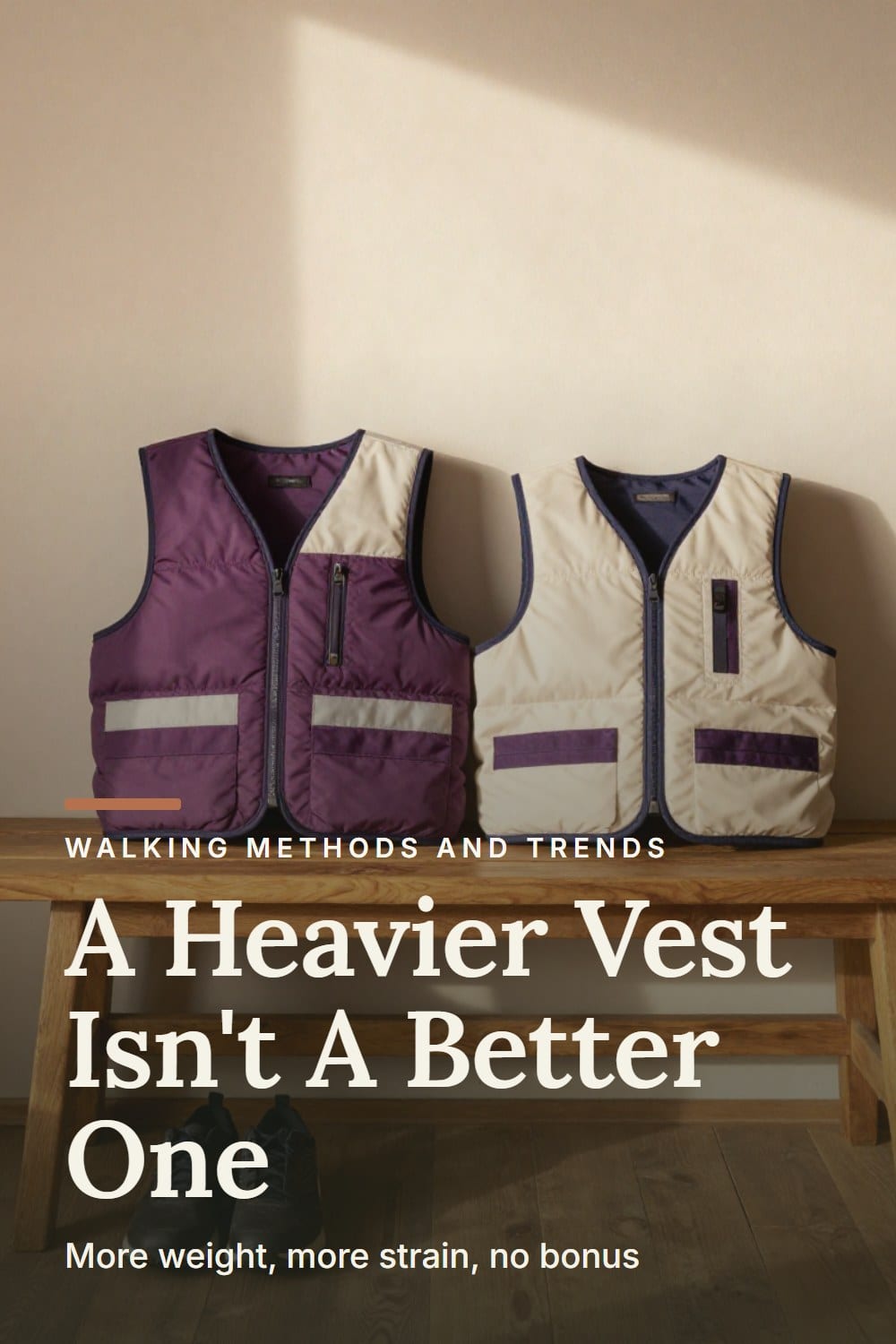
Once walking is already a normal part of your week, adding a vest is simple, as long as you resist the urge to start heavy. Heavier isn't more effective here. It's just more likely to leave your neck and shoulders sore enough that the vest quietly ends up at the back of a closet by week two.
Your first month adding a weighted vest to your walks
This assumes you already have a comfortable walking routine going — a vest is an add-on, not a place to start from zero.
| Week | Vest weight | Walk length | How it should feel |
|---|---|---|---|
| Week 1This week is about the straps and the fit, not the workout. | Empty, or your lightest setting (around 5% of body weight) | Your normal walk length | Barely noticeable — you're getting used to the fit |
| Week 2Sore shoulders or a sore neck means the vest is sitting wrong, not that you should push through it. | Same light weight | Same length | A little more effort by the last few minutes, still easy |
| Week 3Add weight OR time this week — not both at once. | A small increase if weeks 1–2 felt easy (stay under about 10% of body weight) | Same length, or about 5 minutes longer | Noticeably more effort, breathing a little deeper |
| Week 4There's no bonus for the heaviest vest you can carry through a walk. | Whatever weight felt sustainable, not the heaviest one you tried | Back to your normal length and pace | A real addition to your walk, not something you're enduring |
What actually matters when you're shopping for one
Most vest listings read like spec sheets written for someone who has never once worried about a strap digging in by minute ten. Here's what I'd actually stop and check first, roughly in order.
- Starting weight, not top weight. Look for something you can set around 5% of your body weight to begin, with plenty of room to add more later — not the heaviest option shown in the listing photos.
- Even front-and-back weight distribution. A vest that loads evenly across the front and back tends to sit more comfortably over a real walk than one with all the weight bunched into a single pouch.
- Small adjustment increments. Being able to add or remove a small amount of weight at a time matters far more day-to-day than a high maximum weight you'll probably never use.
- Padding that clears your bra line and collarbone. This one detail decides whether you actually put the vest on again tomorrow, or leave it folded in a drawer.
- A breathable panel or mesh back, especially if you walk somewhere warm, or you run warm yourself these days.
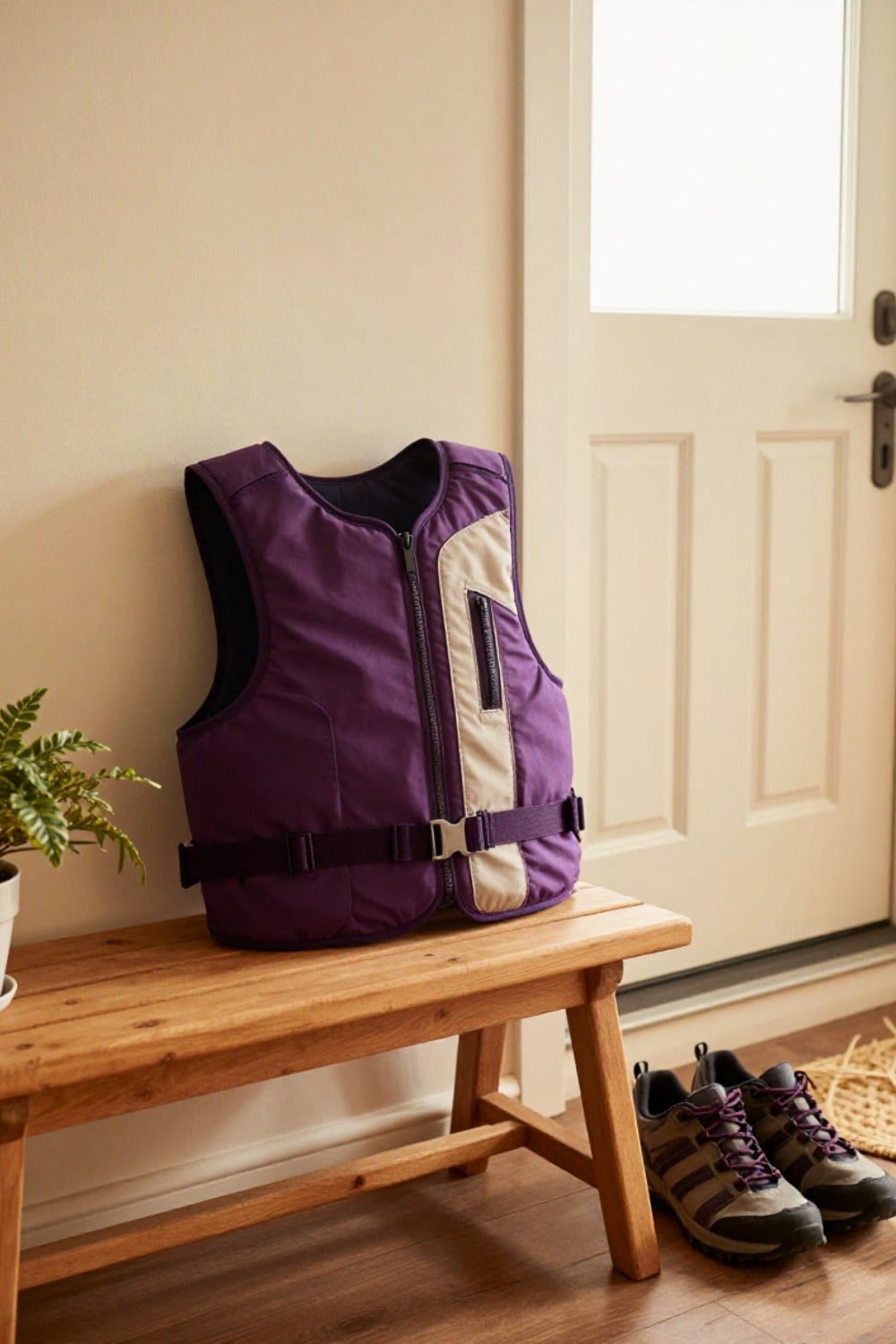
Try it on around the house for a few minutes before your first real walk in it. A vest that feels fine standing still in a bedroom can feel completely different after fifteen minutes of arm swing and shoulder movement outside.
The honest picks: weighted vests and shoes worth comparing
I'm not going to hand you one single 'best' vest, because the right one depends on your frame, your starting-weight comfort zone, and how often you actually think you'll reach for it. These are honest starting points to compare — check current sizing charts, weight-distribution details and reviews before you decide, since specifics shift from listing to listing.
A quick comparison across vests and shoes. Tap through to see current details on each listing.
| What it is | Best for | Why I'd pick it |
|---|---|---|
| Adjustable Weighted Vest (Light, 4–10 lb Range) An adjustable design lets you add small amounts of weight over time instead of committing to one fixed load on day one. | Starting light and building up slowly | An adjustable design lets you add small amounts of weight over time instead of committing to one fixed load on day one. |
| Adjustable Weighted Vest (10–20 lb Range) Worth comparing once you've walked comfortably in a lighter vest for a few weeks and want more room to grow into. | Once a lighter vest feels easy on most walks | Worth comparing once you've walked comfortably in a lighter vest for a few weeks and want more room to grow into. |
| Women's-Fit Vest with Even Front-and-Back Load A vest built around a woman's frame tends to sit more evenly than a unisex design borrowed straight from a gym bag. | Comfort across the chest and shoulders | A vest built around a woman's frame tends to sit more evenly than a unisex design borrowed straight from a gym bag. |
| Supportive Cushioned Walking Shoes Any extra load you carry travels straight down through your feet, so the shoes underneath matter as much as the vest itself. | Extra shock absorption under the added weight | Any extra load you carry travels straight down through your feet, so the shoes underneath matter as much as the vest itself. |
| Wide-Fit Walking Shoes with Arch Support Worth trying if a standard width ever leaves a mark on your foot by evening, vest or no vest. | Wider feet or afternoon swelling | Worth trying if a standard width ever leaves a mark on your foot by evening, vest or no vest. |
No prices here — Amazon requires them to be live, so click through to see what something costs today. Equipment helps; it is never the thing that makes a plan work.
None of this is a diagnosis or a promise about your bones specifically — only what the general research supports, cited plainly below, so you can check it yourself instead of just trusting me.
Where this comes from
Every claim above traces to one of these five.
- 1What To Know About Menopause and Bone Loss
Cleveland Clinic · 2026
Supports: That bone density can decline significantly in the years around menopause — Cleveland Clinic states a loss of up to 20% of bone density within five years of menopause beginning, largely due to declining estrogen.
- 2Does Time Spent Upright Moderate the Influence of a Weighted Vest on Change in Bone Mineral Density During Weight Loss Among Older Adults? A Secondary Analysis of the INVEST in Bone Health Randomized Controlled Trial
Frontiers in Aging · 2026
Supports: That in a careful trial that compared groups, older adults who wore a weighted vest did not retain meaningfully more bone density than a comparison group that did not wear one — the core evidence that a vest alone hasn't been shown to protect bone density.
- 3Long-Term Exercise Using Weighted Vests Prevents Hip Bone Loss in Postmenopausal Women
Journals of Gerontology: Series A (Biological Sciences and Medical Sciences) · 2000
Supports: That postmenopausal women who wore a weighted vest during structured jumping and resistance exercise — not walking — maintained hip bone density over 5 years, while a comparison group lost nearly 4%. The benefit traced to the jumping and resistance training the vest added load to, not to walking alone.
- 4The Do's and Don'ts of Wearing Weighted Vests
Cleveland Clinic · 2026
Supports: That wearing a weighted vest increases the cardiovascular and muscular effort of an activity like walking, that a sensible starting point is 5–10% of body weight, that a vest alone doesn't build strength without added strength training, and that anyone with a previous injury should check with their doctor first.
- 5Osteoporosis Causes, Risk Factors, & Symptoms
NIAMS (National Institutes of Health)
Supports: That osteoporosis risk rises substantially after menopause, driven in large part by declining estrogen, and that the disease often begins developing even before a woman's final period.
Free, and printable
The free 4-Week Indoor Walking Plan
The plan sign-up is not live yet — the mailing list is still being set up. In the meantime, email hello@strongandrooted.com and Diane will send it to you herself.
One email when there is something worth sending. Unsubscribe whenever you like.
Frequently asked questions
Do weighted vests actually build bone density?
How much weight should I start with?
Is a weighted vest safe if I have osteoporosis or a bone density concern?
If it won't help my bones, is a weighted vest even worth buying?
A weighted vest is a reasonable, honest way to make a walk you already do ask a little more of your heart and your muscles. It is not a bone-density shortcut, no matter how many captions say otherwise. If you don't have a walking habit yet, start with the free 4-week plan — no vest and no equipment required. If you already do, and you're curious what else is worth trying, Japanese interval walking and an honest look at walking pads are both good next stops. However you get there, the walking itself is still doing more of the work than anything you strap on top of it.
Free, and printable
The 4-Week Indoor Walking Plan
The plan sign-up is not live yet — the mailing list is still being set up. In the meantime, email hello@strongandrooted.com and Diane will send it to you herself.
One email when there is something worth sending. Unsubscribe whenever you like.
Written by
Diane Marsh
At 49 I was tired, achy, sleeping badly, and being told to do more cardio and eat less — which was making all of it worse. I started walking. Fifteen minutes, indoors, in socks. Three years later I am stronger than I was at forty. I write down exactly what I did, cite the research where it exists, and admit where it doesn't.
Diane is not a doctor, a physical therapist, or a dietitian. She is a woman who rebuilt her own strength after perimenopause, reads the research carefully, cites it, and says so when nobody actually knows.
Strong & Rooted is a participant in the Amazon Services LLC Associates Program, an affiliate advertising program designed to provide a means for sites to earn advertising fees by advertising and linking to Amazon.com. As an Amazon Associate I earn from qualifying purchases. If you click a link and buy something, I may receive a small commission at no additional cost to you. I recommend only equipment I have used myself or would hand to a friend, and commission never decides the order of a list. Prices are never shown here because Amazon requires displayed prices to be live — click through to see what something costs today.
Keep reading
Everything this site knows about walking after 40, in one place — what actually changes in your body, the honest version of every trending method, and exactly which article to read next for where you are right now.
Is Walking Enough for Your Bones and Joints After 40?Walking really is linked to stronger hips — the research on this is genuinely encouraging. But if bone density and joint health are what you're after, walking is the first chapter, not the whole book. Here's the honest, cited version of what to add.
What Walking Really Does for a Midlife Metabolism (An Honest Answer)You've probably been told a walk will change everything menopause does to your body. It won't, not on its own — but here's the honest mechanism instead: what actually changes after 40, why it matters for your heart and blood sugar rather than your mirror, and what genuinely helps more than walking alone.