Sleep After 40: Why It Changed and What Actually Helps
Your sleep really did change after 40, and it isn't just stress or bad habits — there's a real, hormonal reason, plus one safety check almost no sleep article mentions. Here's the honest version: why it happens, the thing doctors say gets missed in women, and what genuinely helps versus what's just marketing.

By Diane Marsh··11 min read
Every claim on this page is checked against Cleveland Clinic, the National Heart, Lung, and Blood Institute, the CDC, and peer-reviewed research published in the Journal of Mid-Life Health, Faculty Reviews and Life — all sources are linked below.

General education, not medical advice. Talk to your doctor before starting something new.
The short version
- Sleep problems are genuinely common in perimenopause — research puts it at roughly 39% to 47%, climbing higher after menopause.
- Falling estrogen and progesterone are a real, physical reason for hot flashes, night sweats and that wide-awake 3 a.m. feeling — not just stress.
- The most important paragraph on this site: sleep apnea risk rises after menopause and often shows up as exhaustion and headaches, not snoring — that's a doctor conversation, not something a routine can solve.
- CBT-I is the best-evidenced non-drug approach for chronic insomnia, including in menopausal women — and almost nobody mentions it before a supplement.
- Morning light, a cooler room and a steady wake time genuinely help around the edges — they just were never going to solve the two things above.
If you're reading this at 2 a.m. with your phone brightness turned all the way down, hoping nobody in the house wakes up and asks why you're awake again — hi. You're not broken, you're not doing something wrong, and you are absolutely not the only one.
Sleep after 40 is different, and it's allowed to be frustrating to admit that out loud. Here's the honest version of this article, up front: some of what's happening to your sleep is completely normal and explainable, some of it deserves more than a bedtime routine, and one part of it is the single most important thing on this whole site.
You're Not Imagining This, and You're Not Alone
Let's start with the number, because it matters more than it sounds like it should. When researchers looked specifically at women in perimenopause, they found somewhere between roughly four in ten and just under half were dealing with real, frequent sleep problems — not the occasional rough night everyone has, but a regular pattern.
So if you've been quietly wondering whether you're the only 47-year-old lying awake doing math about how many hours of sleep you have left before the alarm goes off — you're not. This is one of the most common things women bring up in their 40s and 50s, full stop. Sleep is just one item on a longer list, too — if you want the fuller rundown of what else this stretch of life can throw at you, the honest symptom list is here.
Why Your Sleep Actually Changed
Here's the part that often gets waved away as 'just stress' when it's actually physical. As you move through perimenopause, your body produces less estrogen and less progesterone. Neither hormone was ever just about your cycle — both play a real role in the systems that help you fall asleep and stay asleep.
For a lot of women, the clearest sign is a hot flash or night sweat that shows up while you're asleep. You overheat, you kick off the blankets, you cool down too much, you pull them back on — and somewhere in that cycle, you're wide awake staring at the ceiling.
That 3 a.m. wake-up specifically — wide awake, mind suddenly racing, hard to fall back asleep — usually isn't random either. It tends to line up with a lighter stage of sleep late in the night, sometimes with a hot flash arriving right on top of it. I go through that exact pattern in detail in why you keep waking up at 3 a.m., so I won't repeat all of it here.
The Thing Almost Nobody Screens Women For
Before we get to anything you can try tonight, I need to slow down for the single most important paragraph on this entire site. It's tempting to skip ahead looking for the routine further down the page. Please don't — this is the one piece of information here that can genuinely change what you do next.
Please be careful
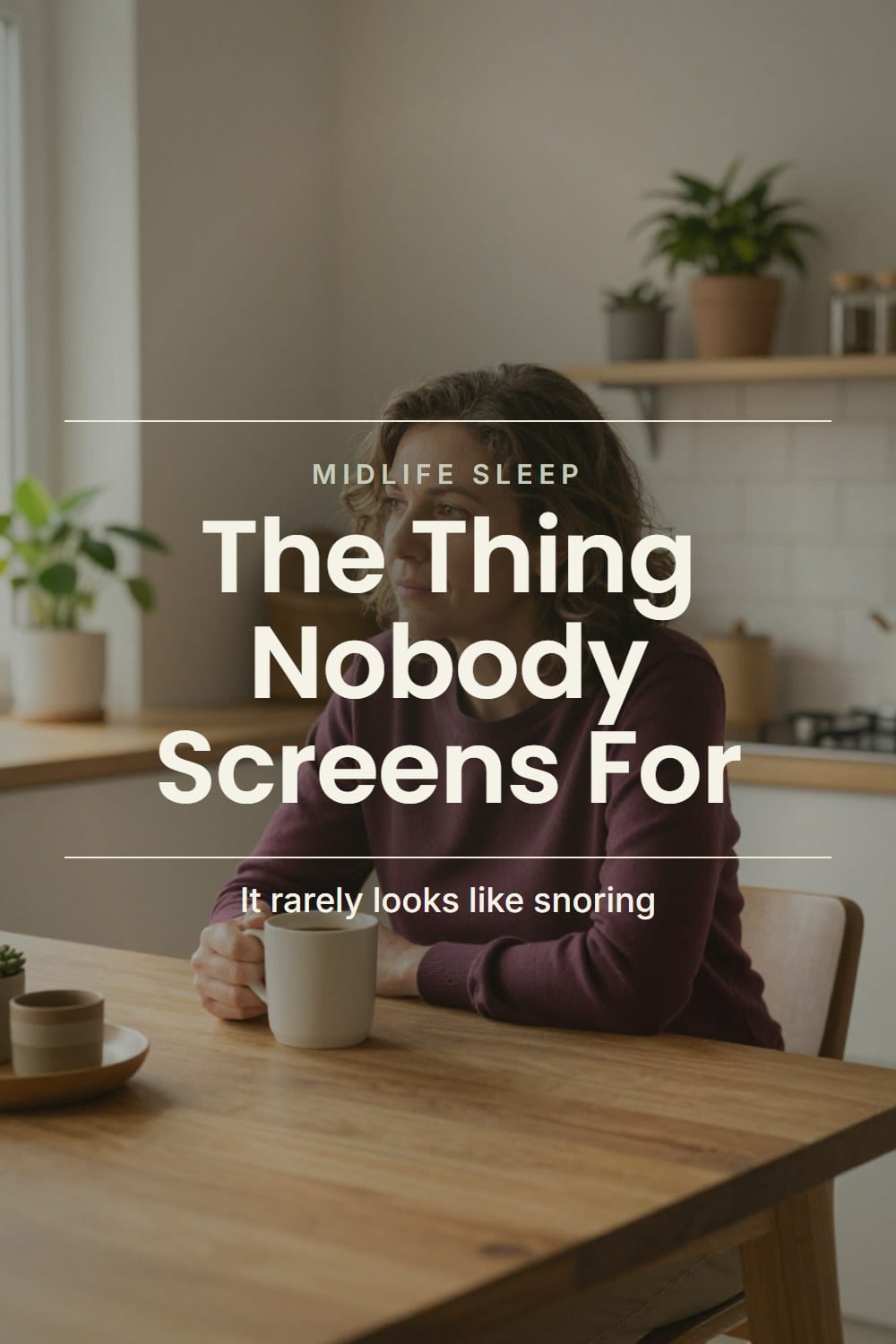
Part of why this article exists is to catch the woman who's about to try a sixth sleep gadget for a problem that sleep hygiene was never going to solve. If any of this sounds like your mornings, bring it up with your doctor — not as a last resort, as the actual next step.
CBT-I: The Sleep Approach Almost Nobody Mentions
If what you're actually dealing with is insomnia — trouble falling or staying asleep that a doctor has looked at — there's a real, well-studied option that almost never comes up before a melatonin gummy does. It's called CBT-I, short for cognitive behavioral therapy for insomnia, and it's probably not what it sounds like.
It isn't open-ended talk therapy about your feelings. It's a short, structured program — typically around six to eight sessions — built around the specific habits and thoughts that keep insomnia going: what time you get into bed, what you do when you can't sleep, what your mind has learned to expect from your bedroom. It's delivered by a trained provider, sometimes by phone or app, not only in person.
CBT-I isn't a fix-all, and I'm not going to pretend it is. Other reviews of the research keep landing on the same conclusion, though — it's the approach with the best evidence behind it for chronic insomnia, including for women in perimenopause and menopause. It's worth asking your doctor about.
What Actually Helps, and What It Can't Do
Once the bigger question — insomnia, apnea, or something else entirely — is actually being looked at, there's a real, honest list of things that help around the edges. The habits below are the ones backed by CDC and Cleveland Clinic guidance, not influencer trends, and none of them are a substitute for the two sections above.
What Actually Helps, Ranked Honestly
None of this replaces the two sections above — it's what's worth trying once the bigger questions are handled.
| What to try | Why it helps | How strong is the evidence | Where to start |
|---|---|---|---|
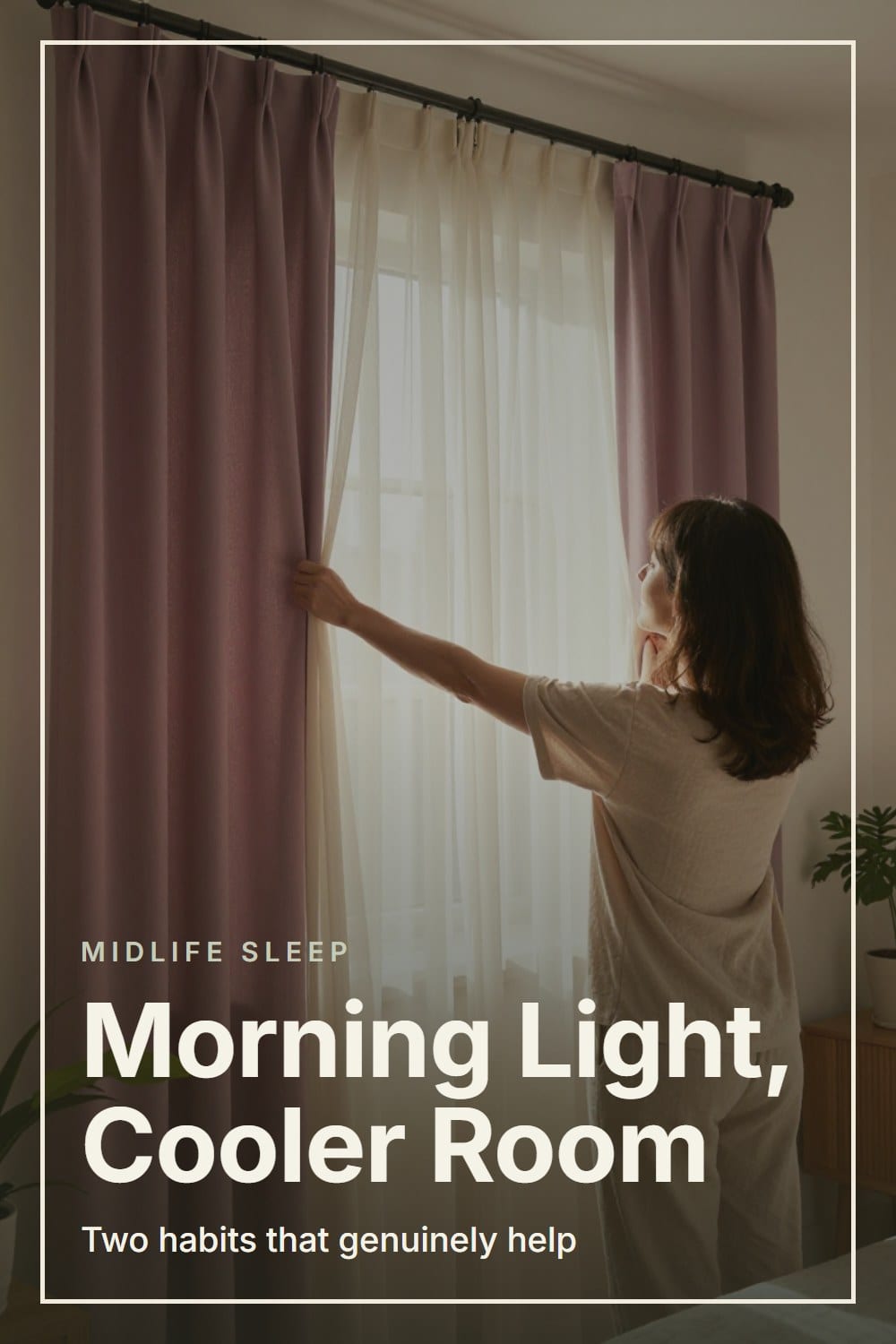
| Morning light | Helps your body's clock recognize daytime, which supports feeling sleepy again later | Consistently supported | Open the curtains or step outside for a few minutes soon after waking |
| A cooler bedroom | Your body temperature needs to drop to sleep well, and hot flashes already work against that | Well-supported | Aim for around 60–67°F if you control the thermostat |
| A steady wake-up time | Keeps your body's clock steady even after a rough night | Well-supported | Pick one wake time and hold it, weekends included |
| Moving earlier in the day | Daytime activity supports nighttime sleep more reliably than late workouts for a lot of women | Reasonably supported | A morning or midday walk counts — see <a href="/hot-flash-friendly-movement/">movement that works around hot flashes</a> |
| CBT-I | Addresses the actual habits and thoughts driving chronic insomnia | The strongest evidence on this list | Ask your doctor for a referral — see the section above |
| A calming wind-down routine | Signals that sleep is coming, even if it can't override hormones or an airway issue | Modest, but real for many women | <a href="/calming-midlife-bedtime-routine/">Our simple wind-down routine</a> is a reasonable place to start |
| Magnesium | An association shows up in some research, but trial results are mixed | Modest and inconsistent, best in women who are actually low | Talk to your doctor first — <a href="/magnesium-and-sleep-supplements-over-40/">the honest breakdown is here</a> |
What's Oversold at Bedtime
A quick, honest word about the supplement aisle, because it's where a lot of tired women end up around 9 p.m. Magnesium shows up constantly in sleep marketing, and the real picture is more modest than the packaging suggests. Some studies show a small improvement, several show none, and the clearest benefit shows up in people who were genuinely low on it to begin with — not everyone who's simply tired. It's a supportive habit at best, never a stand-alone answer, and I go through it honestly, packaging claims and all, in the full magnesium breakdown.
None of this is a diagnosis, and it's not a substitute for your own doctor looking at your specific situation — just what the general research supports, cited plainly below so you can check it yourself instead of just trusting me.
Where this comes from
Every claim above traces to one of these seven.
- 1Menopause and Sleep Disorders
Journal of Mid-Life Health · 2022
Supports: That the prevalence of sleep problems rises to roughly 39% to 47% of women during perimenopause and 35% to 60% after menopause, and that women's rate of obstructive sleep apnea catches up to and can exceed men's after menopause, with women more often reporting insomnia, headache and fatigue rather than the loud snoring typically associated with the condition.
- 2Does Menopause Cause Insomnia and Sleeplessness?
Cleveland Clinic
Supports: That 40% to 60% of women going through menopause report sleep problems, and that a significant drop in estrogen brings on hot flashes and night sweats that directly disrupt sleep through an overheat-then-chill cycle.
- 3Sleep Apnea and Women
NHLBI (National Institutes of Health)
Supports: That women's risk for sleep apnea increases during and after menopause, and that women more often report daytime sleepiness, morning headaches, insomnia, tiredness and waking often during sleep instead of the snoring most people expect, which is part of why the condition often goes unrecognized in women.
- 4We Know CBT-I Works, Now What?
Faculty Reviews · 2022
Supports: That the American College of Physicians names cognitive behavioral therapy for insomnia (CBT-I) as the first-line approach for chronic insomnia, ahead of medication; that a standard program runs about six to eight sessions; and that in one eight-week study of women in perimenopause and menopause, those given structured sessions fell asleep in under half the time they used to, compared with a group given only general menopause education.
- 5The Effectiveness of Cognitive Behavioral Therapy on Insomnia Severity Among Menopausal Women: A Scoping Review
Life · 2024
Supports: That cognitive behavioral therapy for insomnia significantly improves sleep quality and lowers insomnia severity in menopausal women across the studies reviewed, supporting its use as a first-line approach for menopausal insomnia, typically delivered over roughly six to twelve sessions.
- 6What's the Best Temperature for Sleep?
Cleveland Clinic
Supports: That the optimal bedroom temperature for sleep generally falls between 60°F and 67°F, since core body temperature needs to drop for restful sleep.
- 7About Sleep
CDC
Supports: That consistent sleep and wake times, bright light exposure earlier in the day, and a cool, dark, quiet bedroom are basic habits that support better sleep.
Free, and printable
The free 4-Week Indoor Walking Plan
The plan sign-up is not live yet — the mailing list is still being set up. In the meantime, email hello@strongandrooted.com and Diane will send it to you herself.
One email when there is something worth sending. Unsubscribe whenever you like.
Frequently asked questions
Is this just insomnia, or something else?
Why did my sleep get so much worse specifically after 40?
What is CBT-I, and do I need a prescription for it?
Do I really need to see a doctor, or can I just try a better bedtime routine first?
Sleep after 40 really does change, and none of it is in your head. Some of it is hormonal and explainable, some of it deserves an honest conversation with your doctor instead of another routine, and a smaller piece genuinely responds to small, consistent habits. If you take one thing from this article: exhaustion despite enough hours in bed is a question for your doctor, not a personal failing. Start with the full sleep, stress and recovery guide, or go straight to how to actually be heard at that appointment.
Free, and printable
The 4-Week Indoor Walking Plan
The plan sign-up is not live yet — the mailing list is still being set up. In the meantime, email hello@strongandrooted.com and Diane will send it to you herself.
One email when there is something worth sending. Unsubscribe whenever you like.
Written by
Diane Marsh
At 49 I was tired, achy, sleeping badly, and being told to do more cardio and eat less — which was making all of it worse. I started walking. Fifteen minutes, indoors, in socks. Three years later I am stronger than I was at forty. I write down exactly what I did, cite the research where it exists, and admit where it doesn't.
Diane is not a doctor, a physical therapist, or a dietitian. She is a woman who rebuilt her own strength after perimenopause, reads the research carefully, cites it, and says so when nobody actually knows.
Keep reading
Every stress article tells her to reduce it. She can't — not with the parents, the job, and the body she has this year. Here's what to do instead: build the buffer, spend the free levers well, and know the honest difference between stress and something more.
Nervous-System-Friendly Daily Routines (What's Real and What's Marketing)Vagus-nerve hacks, tapping, somatic shaking, pricey courses — "nervous system regulation" is everywhere. Here's an honest sort of what the research actually backs (slow breathing, daylight, movement, people) from what's mostly marketing.
Sleep, Stress and Recovery After 40: The Complete GuideThe whole sleep, stress and recovery territory in one honest place — what's actually changing, what genuinely helps, what's oversold, and exactly which of our deeper guides is yours next. Every claim links to a real source, and where nobody knows yet, I say so plainly.