How Much Protein Do You Actually Need After 40?
Most of us are eating less protein than we think, and the old government minimum was never built for a woman trying to hold onto her muscle after 40. Here's the real number in grams you can actually use, why it goes up instead of down with age, and what a full day of it looks like on an ordinary plate — no recipes required.

By Diane Marsh··10 min read
Every claim on this page is checked against Harvard Health, peer-reviewed journals in gerontology, sports nutrition and kidney health, and The Menopause Society — all seven sources are linked below.
General education, not medical advice. Talk to your doctor before starting something new.
The short version
- Most women need noticeably more protein after 40 than the standard minimum ever assumed — think closer to 70–110 grams a day for most body sizes, not 50 or 60.
- Your muscle gets pickier with age — it takes more protein at a sitting to get the same building response it used to get from less.
- Spreading protein across breakfast, lunch and dinner works better than loading it all into one meal.
- Protein without strength training is half the plan — it gives your muscle the material, not the reason to keep it.
- You don't have to hit the number exactly every day. Getting closer than you are now is what actually matters.
If you've scrolled past one more graphic telling you to "eat more protein after 40," you've probably thought: I probably already do that. Here's the honest, slightly uncomfortable truth: most of us don't, and the old number we all grew up with was never built to answer the question a 52-year-old trying to hold onto her muscle is actually asking.
So let's answer it straight, the way I'd tell a friend over coffee — the real number in grams, why it goes up instead of down with age, and what a full day of it looks like on an ordinary plate. No lab math, no converting. Just the plain version.
So, How Much Protein Do You Actually Need?
Here's where most of the confusion starts. The bare-minimum number most nutrition labels and general guidelines are built around comes out to somewhere around 50-something grams a day for an average-sized woman — enough to keep a sedentary body running, not enough to actively support the muscle you're trying to hold onto in your 40s and 50s. Mistaking that floor for a target is where a lot of us quietly go wrong.
The number that actually matters for a woman past 40 is meaningfully higher — though the research isn't perfectly tidy on one exact figure. A 2023 review of the research on older adults found real muscle benefits well above the standard minimum, and Harvard's own nutrition team lands in that same higher zone. Skip any conversions with this rule of thumb: aim for somewhere between about half a gram and just under three-quarters of a gram of protein for every pound you weigh. A 150-pound woman lands around 70 to 110 grams a day that way — lower end if you're generally healthy and maintaining, higher end if you're specifically working to hold onto muscle.
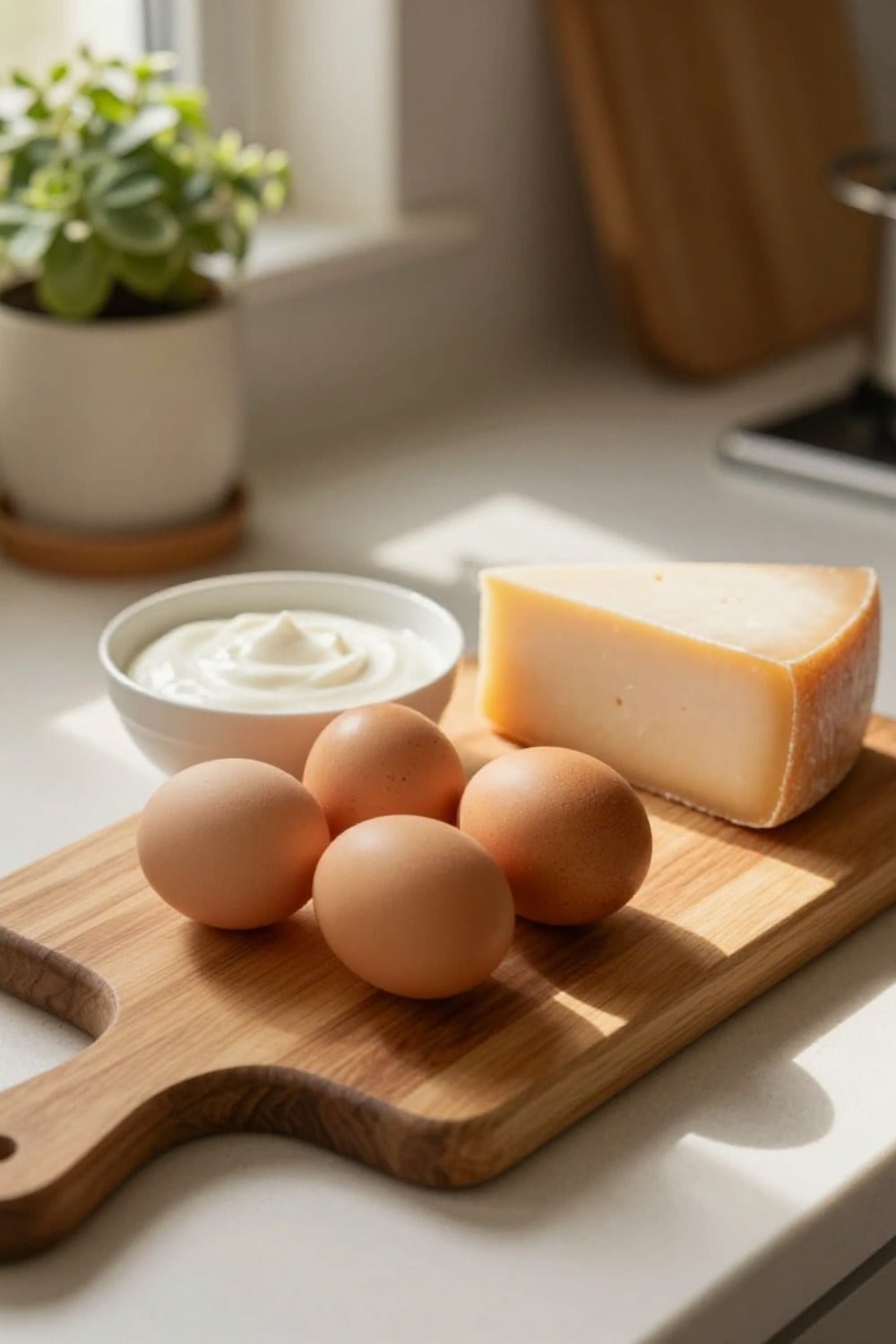
What does that look like on an actual plate, not a formula? Two eggs and a container of Greek yogurt at breakfast. A chicken breast or a can of tuna over greens at lunch. A serving of salmon, ground turkey or cottage cheese at dinner — each landing in the 20-to-40-gram range your body can actually use at once. No scale, no app required, just protein showing up at each meal instead of only one.
Why the Number Goes Up, Not Down, After 40
This is the part that surprises people: your protein target doesn't get smaller as you age. If anything, the case for taking it seriously gets stronger, for two separate reasons.
The first is muscle loss itself. Aging comes with a steady, gradual loss of muscle, and for a lot of women that process picks up noticeably around menopause, as declining estrogen affects the whole musculoskeletal system — muscle and bone both.
The second reason is less well-known: your muscle gets pickier about protein as you get older. Researchers call this anabolic resistance — the same amount of protein that reliably triggered muscle-building in your 20s and 30s produces less of a response past 40. Your muscle isn't broken. It just needs a bigger dose at each sitting to hear the signal as clearly as it used to.
What a Day of Eating Like This Actually Looks Like
This isn't a meal plan and there's no recipe coming — just an honest look at how an ordinary day adds up when you're paying attention to protein at each meal instead of leaving it all to dinner.
A Day of Real Food, Not a Meal Plan
Loose targets, not rules — round up or down and it still counts.
| Meal | Rough protein target | What it looks like in real food | The easy version |
|---|---|---|---|
| Breakfast | About 20–30 grams | Two eggs plus a small container of plain Greek yogurt | A store-bought protein shake or a Greek yogurt cup, eaten in the car |
| Lunch | About 20–30 grams | A chicken breast or a can of tuna over a big salad | Rotisserie chicken from the grocery store deli, already cooked |
| Dinner | About 20–30 grams | A piece of salmon, ground turkey, or a cup of cottage cheese with vegetables | Whatever protein you already have thawed, plus a bagged salad |
| Snack | About 10–15 grams | A handful of nuts and a piece of string cheese, or a scoop of cottage cheese | Whatever's already in the fridge door — that's exactly why it's there |
None of this requires cooking a new dish — just keeping a few ordinary things on hand and reaching for them at each meal, the easiest habit-level fix there is. My easy high-protein habits post goes deeper on the grocery-list version of this, and if mornings are your weak spot specifically, getting protein at breakfast is the single highest-leverage meal to fix first.
The Honest Part: Protein Without Lifting Is Half the Story
Here's the thing nobody selling you a protein plan wants to say: protein alone doesn't build or hold onto muscle. It supplies the raw material. Your muscle still needs a reason to use it — and that reason is resistance, not protein powder.
Think of it like delivering lumber to a house with no one there to build with it. The protein shows up either way — whether your body uses it to hold onto muscle depends on whether you're giving that muscle a reason to, through some kind of regular strength work. If you don't have a strength routine yet, strength training for beginners over 40 is a genuinely honest place to start — no gym, no experience required.
If getting enough protein from food alone feels like a stretch on a busy week, a shake or scoop of powder is a reasonable tool — not a requirement, and not automatically better than food. I go through the honest tradeoffs in protein powder for women over 40 if you're weighing whether it's worth adding.
None of this is a diagnosis or a promise about your own body specifically — only what the sources below actually say, linked plainly so you can check them yourself instead of just trusting me.
Where this comes from
Every claim above traces to one of these seven.
- 1Are you eating enough protein?
Harvard Health Publishing · 2024
Supports: That a 2023 review found benefits at about 0.45 to 0.73 grams of protein per pound of body weight — above the standard minimum — that the body uses only 20 to 40 grams at one sitting, and that 46% of adults over 51 in one large study fell short of it.
- 2Nutritional Interventions: Dietary Protein Needs and Influences on Skeletal Muscle of Older Adults
The Journals of Gerontology: Series A · 2023
Supports: That protein intakes above the standard minimum are linked to better muscle strength and function in older adults, with the higher end most relevant for those holding onto muscle.
- 3Practical pointers about protein
Harvard Health Publishing · 2024
Supports: That the standard protein minimum for adults is about 0.36 grams per pound of body weight, and that spreading protein across meals is the general guidance.
- 4Musculoskeletal syndrome of menopause: When menopause makes you ache all over
Harvard Health Publishing · 2026
Supports: That the drop in estrogen at midlife affects the entire musculoskeletal system, including reduced muscle mass and bone density, affecting an estimated 70% of women during perimenopause and menopause.
- 5How much protein can the body use in a single meal for muscle-building? Implications for daily protein distribution
Journal of the International Society of Sports Nutrition · 2018
Supports: That older adults need more protein in a single sitting than younger adults to maximally trigger muscle-building, and that spreading it across at least four meals works better than loading one.
- 6Effect of a High-Protein Diet on Kidney Function in Healthy Adults: Results From the OmniHeart Trial
American Journal of Kidney Diseases · 2013
Supports: That in adults who started with healthy kidneys, a higher-protein diet raised a kidney-filtration marker slightly with no evidence of kidney damage, though the trial excluded existing kidney disease and long-term effects remain unsettled.
- 7Premature menopause linked to increased musculoskeletal pain and likelihood of sarcopenia
The Menopause Society · 2024
Supports: That declining estrogen is linked to a higher likelihood of sarcopenia (age-related muscle loss), with muscle stiffness reported by 54% of US women ages 40 to 55.
Free, and printable
The Free 4-Week Indoor Walking Plan
The plan sign-up is not live yet — the mailing list is still being set up. In the meantime, email hello@strongandrooted.com and Diane will send it to you herself.
One email when there is something worth sending. Unsubscribe whenever you like.
Frequently asked questions
So how much protein do I actually need after 40?
Is it too much protein for my kidneys?
Do I need a protein powder or shake to hit this number?
What if most of my protein ends up at dinner?
The honest version, all the way through: most of us eat less protein than we think, the old minimum undersells what a woman past 40 benefits from, and the number matters less than showing up at it more days than not. If you want the fuller nutrition picture, the complete nutrition and protein guide is the place to start. And if lifting is the piece you haven't added, that's genuinely the other half of this conversation — protein just gives your muscle something to work with.
Free, and printable
The 4-Week Indoor Walking Plan
The plan sign-up is not live yet — the mailing list is still being set up. In the meantime, email hello@strongandrooted.com and Diane will send it to you herself.
One email when there is something worth sending. Unsubscribe whenever you like.
Written by
Diane Marsh
At 49 I was tired, achy, sleeping badly, and being told to do more cardio and eat less — which was making all of it worse. I started walking. Fifteen minutes, indoors, in socks. Three years later I am stronger than I was at forty. I write down exactly what I did, cite the research where it exists, and admit where it doesn't.
Diane is not a doctor, a physical therapist, or a dietitian. She is a woman who rebuilt her own strength after perimenopause, reads the research carefully, cites it, and says so when nobody actually knows.
Keep reading
This is the whole nutrition territory in one honest place — not a diet, not a meal plan, just four ideas that actually hold up: protein, fiber, steady energy and what's really just marketing. Read it once and you'll know exactly which deeper guide is yours.
Blood-Sugar-Friendly Habits for Steadier Energy After 40The 3 PM crash feels like a personal failing, but it's mostly a blood-sugar story — what you ate, in what order, and whether you moved afterward. Here's what's actually happening after a meal, why it can feel different in midlife, and the small, honest swaps that make the afternoon gentler.
Getting Enough Protein at Breakfast (The Meal That Sets Up Your Day)Breakfast is very likely the single meal where you're losing the most ground on protein — and it's also the easiest one to fix, because unlike dinner, breakfast repeats every day. Here's what a real protein-forward breakfast actually looks like, the five-minute and night-before options, and an honest answer for mornings when you're just not hungry.